“care products” search results (6000)

Exquisite Ethiopian coffee beans Starbucks Ethiopian coffee
Ethiopia has unique natural conditions suitable for growing all imaginable varieties of coffee. As a upland crop, Ethiopian coffee beans are mainly grown in areas between 1100 and 2300 meters above sea level, roughly distributed in southern Ethiopia. Deep soil, well drained soil, weakly acidic soil, laterite and soil are soft and contain
2016-04-30 Beautiful Ethiopia coffee beans Buck coffee Youde Tiandu
Introduction of Coffee Bean growing Environment in Ethiopia
Ethiopian coffee beans grow in close to the natural environment, after years of planting under the same growth conditions, Ethiopian coffee beans have gradually adapted to the environment here. More than 60% of coffee beans are grown in forests or semi-forests. Large-scale coffee-growing villages account for about 35% of the country's total coffee production. Many of these are used.
2016-07-05 Ethiopia coffee beans growth environment introduction coffee manor producing area
Introduction to the characteristics of St. Pei's Coffee Bean Flavor Manor, which ranks among the world's famous brands.
Dora, Puerto Rico, coffee is the best in the world. Puerto Rico coffee is generally carefully cultivated, pure, fragrant, granular, among which the best is among the world's famous brands. Doradot is the best, with a strong flavor and a long aftertaste, and its aroma is comparable to that of any coffee variety. Puerto Rico was originally inhabited by Indians and went to America for the second time by Columbus.
2016-08-06 Living in the world famous brands Puerto Rico coffee beans flavor taste manor
Be careful of the common sense of drinking coffee in the "five most"
The top five coffee drinkers who drink coffee carefully have become a fashion choice for more and more people. How much do you know about coffee if you often go to coffee bars? Don't get a reputation for being old-fashioned and out-of-date because of small details. The author collected a lot of coffee keywords, to see which of the following will make you show flaws, quickly take a seat. First sip: the first sip of coffee is the key. Coffee
2015-03-13 Be careful coffee five most common sense be careful five become more and more
Introduction of Tanzania Kilimanjaro Coffee, which is rich in volcanic soil
Tanzania's main coffee producing area, located at the foot of Mount Kilimanjaro, is rich in volcanic soil. Some coffee trees planted here are more than 100 years old. Coffee was first introduced by Christians from Kenya to grow coffee. Coffee trees must be carefully taken care of, weeded and fertilized. And old branches must be cut off so that new branches can grow to maintain the quality of coffee beans.
2016-07-01 Own rich volcano soil Tanzania Kili Mazar Luo coffee coffee
Coffee from main producing areas in Tanzania Kilimanjaro Coffee Kilimanjaro Mountain Fire area
Tanzania's main coffee producing area, located at the foot of Mount Kilimanjaro, is rich in volcanic soil. Some coffee trees planted here are more than 100 years old. Coffee was first introduced by Christians from Kenya to grow coffee. Coffee trees must be carefully taken care of, weeded and fertilized. And old branches must be cut off so that new branches can grow to maintain the quality of coffee beans.
2016-07-21 Tanzania main producing areas coffee introduction Kili Mazar Luo coffee Geely
Introduction to the Fine Coffee Flavor Manor of Ethiopia
Ethiopian coffee beans grow in close to the natural environment, after years of planting under the same growth conditions, Ethiopian coffee beans have gradually adapted to the environment here. More than 60% of coffee beans are grown in forests or semi-forests. Large-scale coffee-growing villages account for about 35% of the country's total coffee production. Many of these are used.
2016-07-15 Ethiopia boutique coffee flavor taste manor producing area introduction
Introduction to the flavor and taste of Ethiopian boutique coffee beans and the characteristics of the manor producing area
A large amount of coffee production (95%) is done by small shareholders, with an average yield of 561 kg per hectare. For centuries, minority holders of Ethiopian coffee farms have been producing a variety of high-quality types of coffee. The secret of producing high-quality coffee is that coffee farmers have developed the right environment through generations of repeated learning about the coffee planting process.
2016-08-25 Smell mellow thick Ethiopia boutique coffee beans flavor taste manor
Description of Tanzanian Coffee Flavor with complex Taste; introduction to the characteristics of grinding degree and taste of varieties
Tanzania's main coffee producing area, located at the foot of Mount Kilimanjaro, is rich in volcanic soil. Some coffee trees planted here are more than 100 years old. Coffee was first introduced by Christians from Kenya to grow coffee. Coffee trees must be carefully taken care of, weeded and fertilized. And old branches must be cut off so that new branches can grow to maintain the quality of coffee beans.
2016-10-07 Complexity taste Tanzania coffee flavor description grinding characteristics variety production
Ethiopian coffee flavor Ethiopian coffee characteristics Ethiopian coffee taste
Ethiopia has unique natural conditions suitable for growing all imaginable varieties of coffee. As a upland crop, Ethiopian coffee beans are mainly grown in areas between 1100 and 2300 meters above sea level, roughly distributed in southern Ethiopia. Deep soil, well drained soil, weakly acidic soil, laterite and soil are soft and contain
2016-08-29 Ethiopia coffee flavor characteristics taste have Tiandu
Natural fermented Ethiopian coffee flavor, characteristics, taste and estate
Ethiopia is blessed with natural conditions for growing all conceivable varieties of coffee. Ethiopia's coffee beans are mainly grown as highland crops in areas with altitudes of 1100-2300 meters above sea level, roughly distributed in southern Ethiopia. Deep soil, well-drained soil, weakly acidic soil, laterite and soft soil containing
2016-08-31 Natural Fermented Sunlight Ethiopian Coffee Flavor Characteristics Taste Manor
Introduction of Guatemalan coffee beans located in the Central American Isthmus
It is located in the Central American Isthmus, bordering Mexico in the north and Honduras in the south. Due to the high mountains and volcanoes in the country, coupled with the careful care of Guatemalan farmers, the quality of Guanguo coffee appears to be quite excellent. The country's earliest record of growing coffee dates back to 1750, about 250 years ago, but at that time the coffee tree was only an ornamental flower in the garden; until 1800, it was contaminated by European chemistry.
2016-06-18 Located in Central America Isthmus Guatemala Coffee beans introduction
Introduction of Kilimanjaro Coffee with strong aroma and sour taste
The main coffee producing area in Tanzania is located at the foot of Mount Kilimanjaro, which is rich in volcanic soil. Some coffee trees planted here are more than 100 years old. Coffee was first planted by Christians from Kenya. Coffee trees must be carefully taken care of, weeded and fertilized. And the old branches must be cut off so that they can grow new ones.
2016-09-13 Aroma full-bodied sour prominent beggar Mazar Luo coffee coffee taste characteristics
Cultivation and Development of Robusta Coffee
"Robusta" coffee, commonly known as "sturdy beans", can be grown at low elevations (200 to 800 meters above sea level), has strong resistance to diseases and insect pests, is not vulnerable to agricultural disasters, has a high annual output per unit area, and is harvested in large quantities by machine. in general, the cost of production is much lower than that of Arabica coffee. "Robusta" coffee usually has an ordinary, rigid and pungent flavor, and because
2015-03-16 Robes Booth Coffee planting Development
Introduction of Bali Coffee Flavor and Flavor Coffee beans in Manor production area
Another special sight is that most of the motorcycles in Bali only have a rearview mirror on one side, and the other side is not stolen, but dismantled by themselves. Because people here can't turn their minds around, they can only take care of one side of the car. Haha, what a classic! Therefore, when crossing the road here, we must pay attention to safety, because the probability of traffic accidents is still relatively high. after all
2016-07-19 Bali coffee flavor taste manor producing area boutique coffee beans introduction there are one
Methods of making and tasting Italian espresso
Today, the students in the coffee class have entered the training of the espresso course. In the course, I prepared two kinds of selected espresso for the students. In Brista, we named these two classic espresso combinations: Italian No. 1 and Italian No. 2. In the baking classroom, students carefully hand-select the raw beans that need to be assembled, which is a very important teaching link.
2015-01-08 Boutique coffee common sense Italian concentration production tasting methods today
Tanzanian coffee bean Kilimanjaro coffee with stronger coffee concentration, better taste and flavor
Tanzania's main coffee producing area, located at the foot of Mount Kilimanjaro, is rich in volcanic soil. Some coffee trees planted here are more than 100 years old. Coffee was first introduced by Christians from Kenya to grow coffee. Coffee trees must be carefully taken care of, weeded and fertilized. And old branches must be cut off so that new branches can grow to maintain the quality of coffee beans.
2016-06-28 Coffee concentration stronger taste aroma okay Tanzania coffee beans beggar
Strong flavor and aroma of Kilimanjaro coffee in the highlands of northern Tanzania
Tanzania's main coffee producing area, located at the foot of Mount Kilimanjaro, is rich in volcanic soil. Some coffee trees planted here are more than 100 years old. Coffee was first introduced by Christians from Kenya to grow coffee. Coffee trees must be carefully taken care of, weeded and fertilized. And old branches must be cut off so that new branches can grow to maintain the quality of coffee beans.
2016-06-30 Taste fragrance strong Tanzania North Highland Kili Mazar Luo Coffee
A good cup of coffee, from beans to cups (makecoffee coffee workshop)
Coffee workshop provides coffee lovers and coffee industry with the best quality raw and cooked beans; coffee workshop completes the process of coffee from fruit to cup. Starting with the red coffee cherry fruit, peeled, dried and turned green, the beans are carefully roasted in the coffee workshop, then packed in an one-way valve bag, and finally ground and brewed into a cup of coffee overflowing with aroma.
2015-10-22 One cup coffee beans cup makecoffee workshop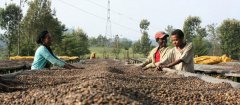
Flavor, characteristics, taste and manor introduction of naturally fermented Ethiopian coffee
Ethiopia has unique natural conditions suitable for growing all imaginable varieties of coffee. As a upland crop, Ethiopian coffee beans are mainly grown in areas between 1100 and 2300 meters above sea level, roughly distributed in southern Ethiopia. Deep soil, well drained soil, weakly acidic soil, laterite and soil are soft and contain
2016-08-31 Natural fermentation Solar Ethiopia Coffee Flavor characteristics Taste Manor